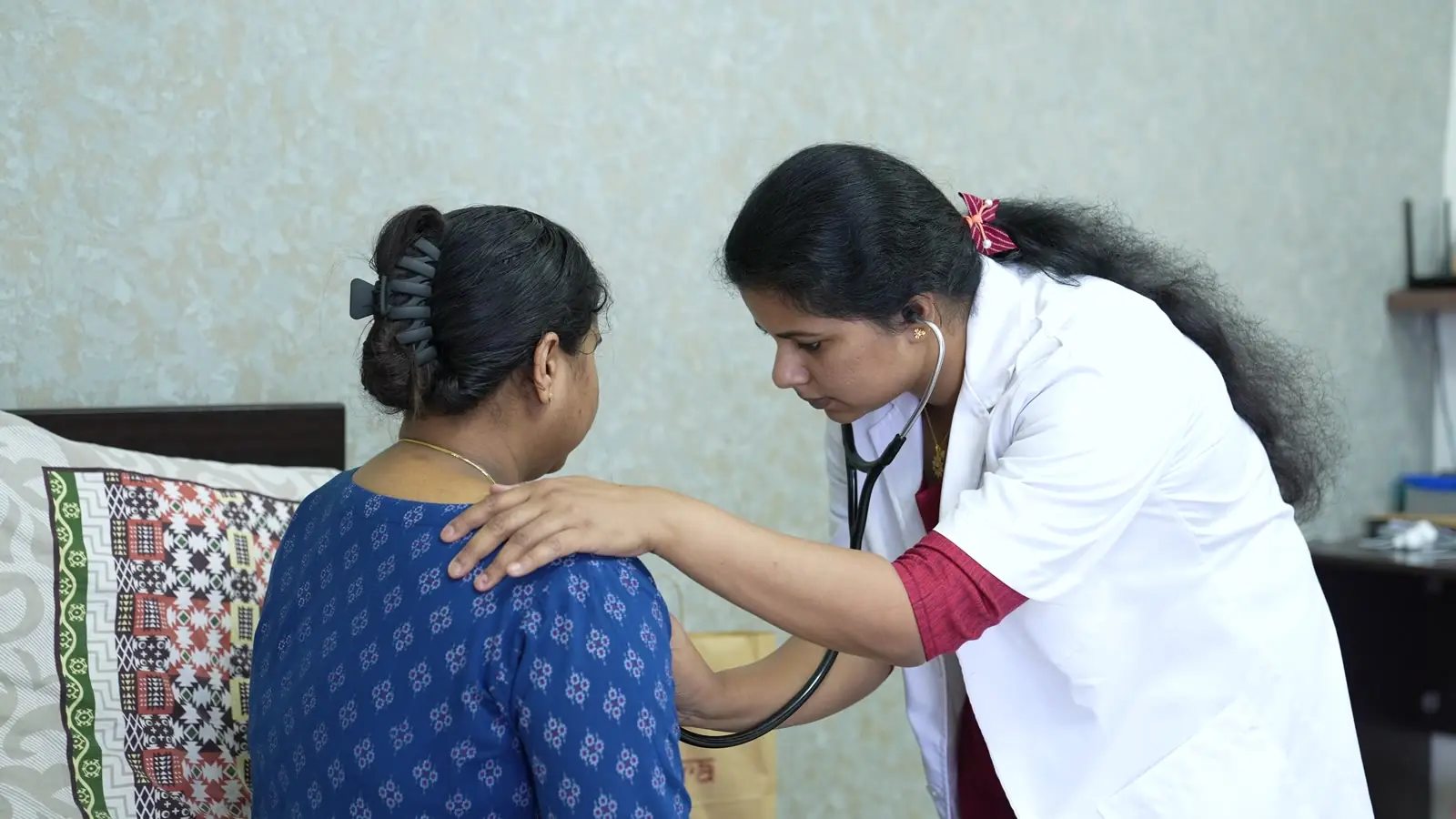

Ayurvedic weight management at Mantra is built around your digestion and body type. After a consultation, the doctor may plan herbal medicine to support metabolism, Udvarthanam (a dry herbal powder therapy), Panchakarma where suitable, and a practical diet and activity plan. The aim is steady, sustainable weight loss rather than a crash diet.
Common signs we treat
Why weight is about more than calories
Many people in Dubai find that diets work for a few weeks, then the weight returns. Ayurveda looks at weight gain mainly as an increase of Kapha and fat tissue (Meda), combined with weak or irregular digestion. Late dinners, long hours sitting, sweet and fried foods, poor sleep and stress all slow the metabolism.
So instead of a single diet chart for everyone, our doctors first understand your body type, digestion and daily routine, and plan from there.

What your plan may include
- Udvarthanam: a vigorous oil therapy with dry herbal powders in an upward direction. It is traditionally used to reduce Kapha, improve circulation and tone the skin.
- Herbal medicine: to support digestion and fat metabolism.
- Panchakarma: for some people, a cleansing programme planned by the doctor.
- Diet plan: practical meals that fit your work and family life, not a list of foods you can never eat.
- Activity and sleep: simple, regular movement and better sleep habits.

Habits that make the difference
- Make lunch the main meal of the day and keep dinner light and early.
- Drink warm water through the day instead of cold or sweet drinks.
- Walk for 15 to 20 minutes after meals when you can.
- Avoid sleeping during the day.
- Eat slowly, without screens, and stop when you are comfortably full.
Weight and other health conditions
Weight gain can be linked to thyroid problems, PCOS, diabetes or medicines. Please bring your recent blood reports. If you have several metabolic risk factors, see our metabolic syndrome care.