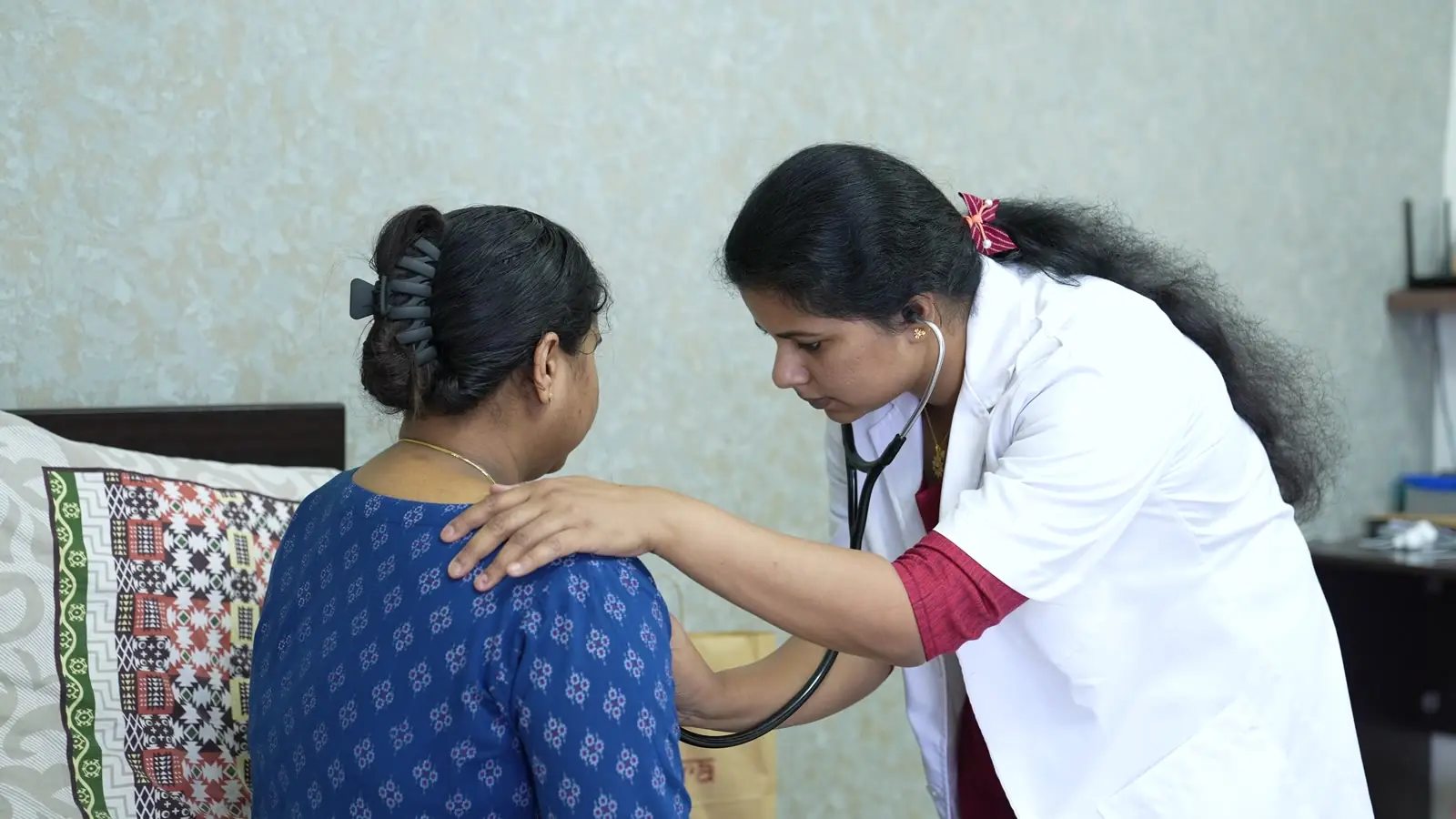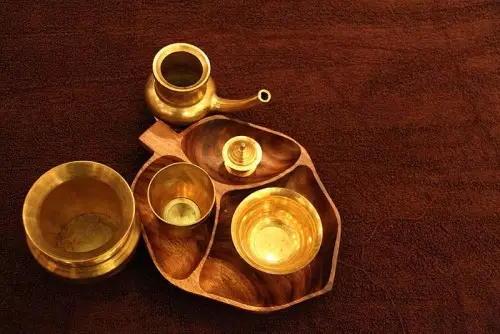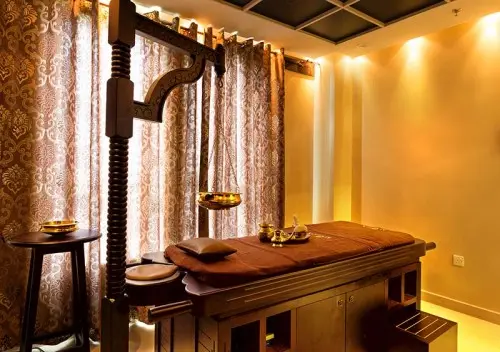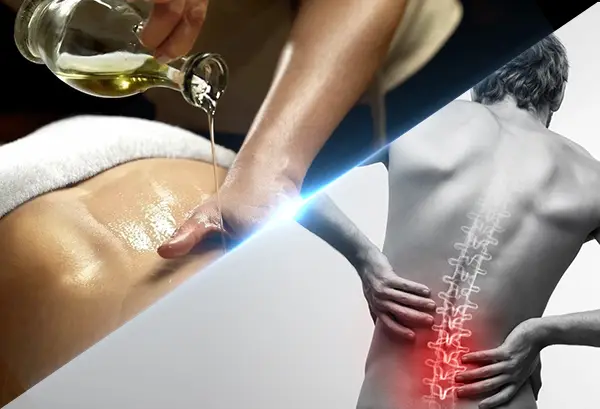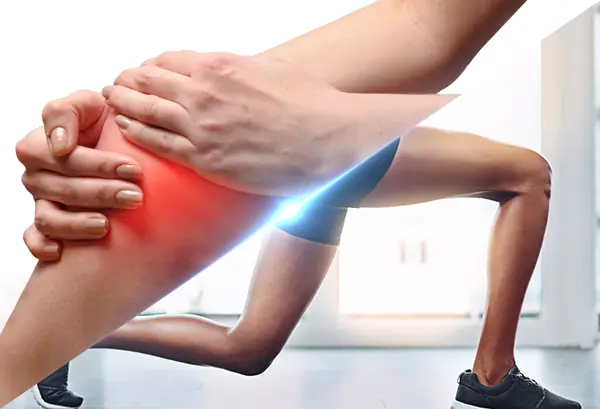
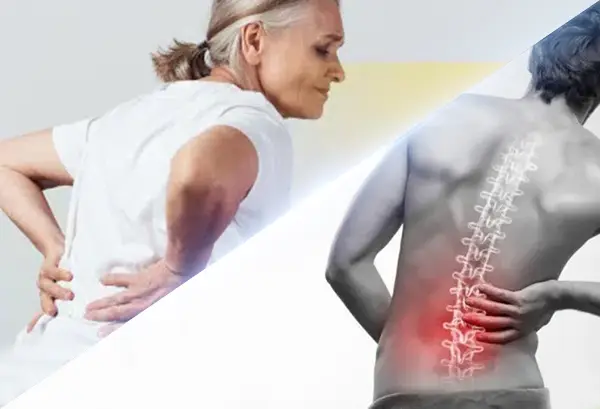
Spondylosis is wear of the discs and joints of the spine. At Mantra, Ayurvedic care focuses on nourishing and lubricating the tissues and calming Vata. After a consultation, the doctor may plan Abhyangam, Kati Vasti or Greeva-area oil therapies, Elakizhi and Pizhichil with herbal medicine, plus posture and movement advice.
Common signs we treat
What spondylosis means
Spondylosis is a general term for wear and tear of the spine. With age, posture strain or old injuries, the discs between the vertebrae lose water and height, the joints thicken and small bony outgrowths can form. In the neck it is called cervical spondylosis; in the lower back, lumbar spondylosis.
Ayurveda describes this as dryness and depletion of the tissues caused by increased Vata. So unlike a simple muscle strain, treatment focuses on nourishing and lubricating the spine as well as reducing pain.
How we treat it
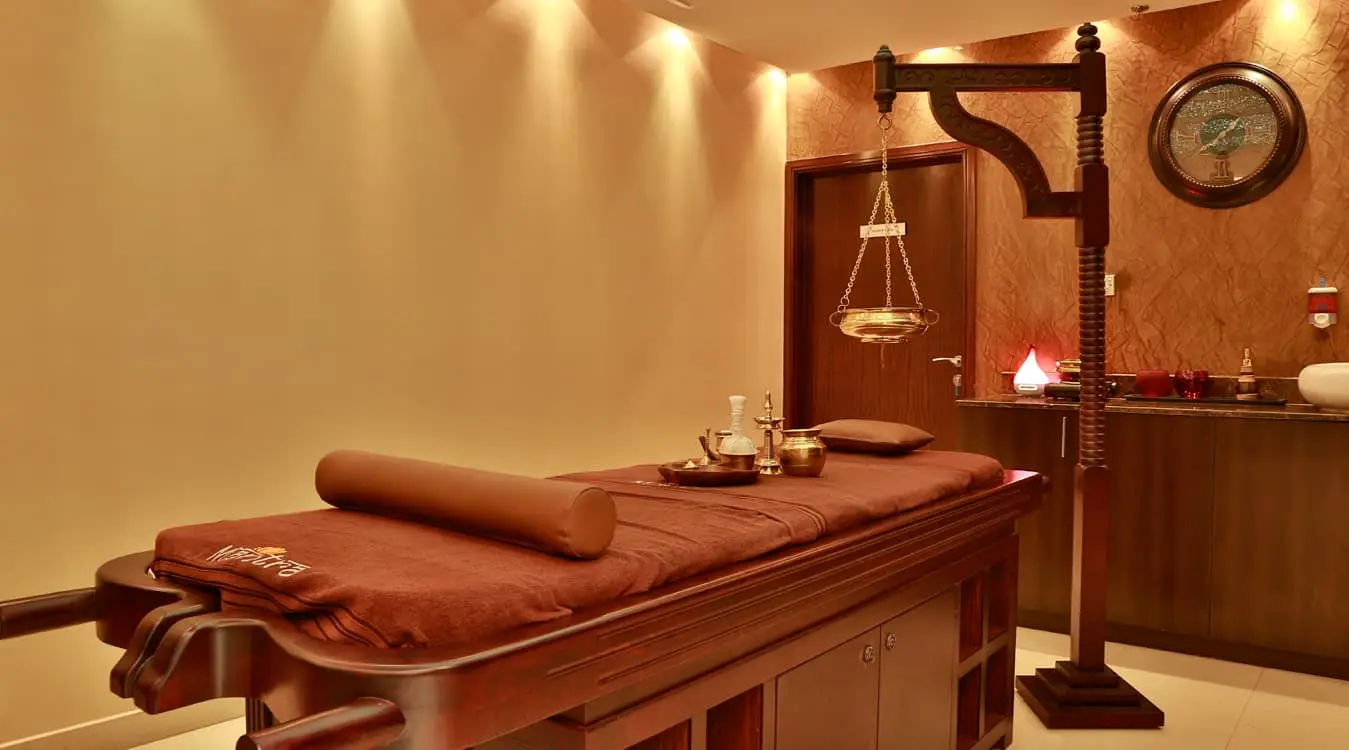
- Oil therapies: Abhyangam and localised therapies like Kati Vasti hold warm medicated oil over the affected area to soothe stiffness.
- Elakizhi: herbal leaf bundles to reduce swelling and spasm around the spine.
- Pizhichil: warm oil poured over the body, often chosen for long-standing stiffness and nerve symptoms.
- Herbal medicine: to support joints, bones and nerves from within.
- Movement plan: gentle stretches and posture changes you can keep doing at home.
Living well with spondylosis
Stay active with walking and gentle stretching, avoid long periods in one position, and keep the spine warm in cold AC environments. Warm, well-cooked meals with good fats such as ghee are traditionally recommended to balance Vata.
Spondylosis of the neck often overlaps with neck pain, and lumbar spondylosis with back pain. Our doctor will plan care for the area that troubles you most.
Seek urgent care if
You notice new weakness in the arms or legs, trouble walking, or loss of bladder or bowel control.