
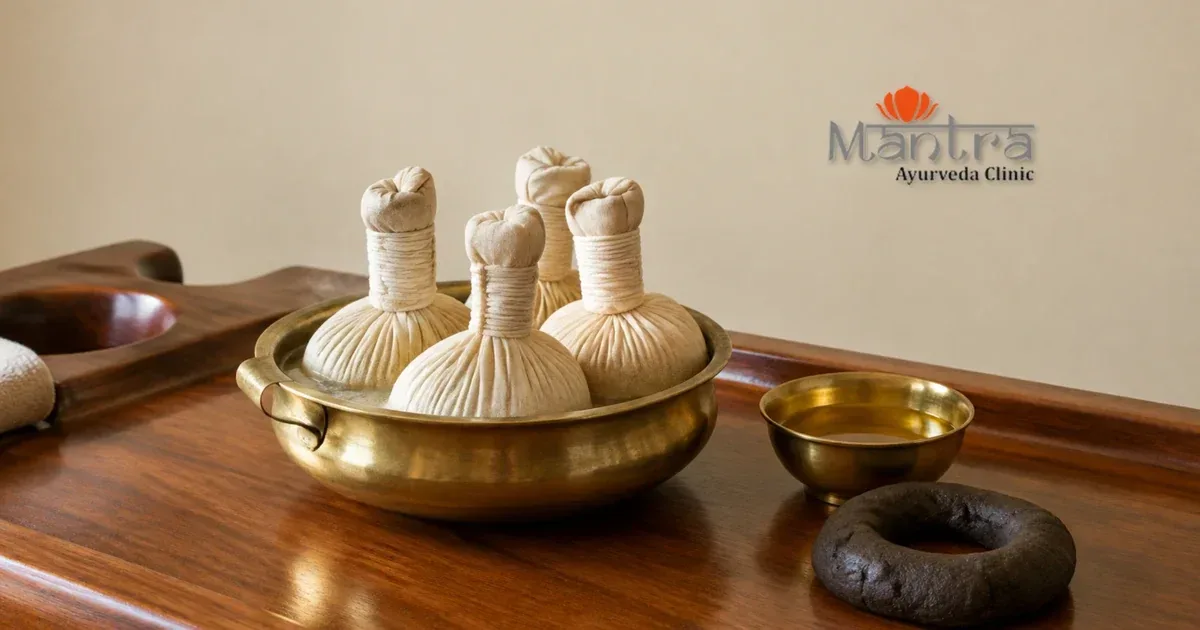
Kati Vasti keeps warm medicated oil pooled on one spot of the lower back inside a ring of dough. Elakizhi uses cloth bundles of herbal leaves fried in oil, warmed and pressed over larger areas. Potli Kizhi uses warmed herbal pouches in a similar rhythm. The doctor chooses based on where the problem sits and what is safe for you.
If you have looked at Ayurvedic care for back or neck trouble in Dubai, you have probably seen all three names. At Mantra Ayurveda Clinic they appear on several treatment pages: Kati Vasti and Elakizhi for back concerns, Elakizhi and Potli Kizhi for neck, spine and muscle concerns. People reasonably ask what the difference is and whether they can pick one. Here is a plain explanation.
What is Kati Vasti?
"Kati" refers to the lower back and "Vasti" here means holding or retaining. The therapist builds a small wall from dough on the lower back, then fills it with warm medicated oil. The oil is kept warm and replaced as it cools, so the area stays in steady contact with it for the session. You lie face down throughout.
Because the oil stays on one defined spot, Kati Vasti is a focused therapy. Doctors often consider it when discomfort is centred on a particular part of the lower back rather than spread across the body.
What is Elakizhi?
"Ela" means leaf and "Kizhi" means bundle. The National Institute of Ayurveda's published protocol for Patra Pinda Sweda, the classical name for this therapy, describes herbal leaves fried in oil and tied into cloth packs, which are then heated in medicated oil and applied to the body by two therapists working in a coordinated way (NIA Panchakarma protocols). The same protocol notes that therapists check the pack temperature on their own hand first to avoid burns.
Elakizhi covers larger areas than Kati Vasti, such as the whole back, shoulders or limbs, and combines warmth, herbal oil and gentle rhythmic pressure. It is a form of fomentation, meaning it encourages warmth and mild sweating in the area.
What is Potli Kizhi?
Potli Kizhi also uses warmed herbal bundles, often called potlis, applied in a rhythmic pattern. The contents of the pouch vary with the doctor's choice and the purpose of the session. On Mantra's site, Potli Kizhi appears alongside Abhyangam, Elakizhi and Nasyam in plans for neck pain, spondylosis and muscular aches.
How do the three compare?
| Point | Kati Vasti | Elakizhi | Potli Kizhi |
|---|---|---|---|
| What touches the skin | Warm medicated oil held in a dough ring | Warm cloth bundles of oil-fried herbal leaves | Warm herbal pouches |
| Area | One focused spot, usually the lower back | Larger areas or the whole body | Larger areas, often neck, shoulders and limbs |
| Feel | Still, steady warmth | Warm, rhythmic pressure | Warm, rhythmic pressure |
| Where it appears on Mantra's site | Back pain plans | Back, neck, spine and muscle plans | Neck, spondylosis and muscle plans |
How does the doctor choose between them?
You do not need to pick the therapy yourself. In the consultation the doctor considers:
- Where the discomfort sits. One spot in the lower back points one way; stiffness across the neck and shoulders points another.
- How it behaves. Stiffness that eases with warmth, pain that worsens with cold, or swelling that feels hot all change the choice.
- How long it has been there. A recent strain and a long-standing problem are planned differently.
- Your general health. Skin sensitivity, blood pressure, diabetes and other conditions affect whether heat-based therapies suit you.
Often the plan combines therapies, for example Abhyangam first, followed by Elakizhi or Kati Vasti, over a course of sessions. The doctor explains the sequence before you start.
Who should avoid these therapies, or wait?
Heat-based therapies are not for everyone. The NIA protocol lists fever, fractures and severe inflammation among the reasons not to use leaf-bundle fomentation, along with the general precautions for heat therapies. In day-to-day practice, doctors also take extra care with:
- Pregnancy, unless the doctor specifically advises otherwise.
- Broken or infected skin over the area.
- Reduced sensation, for example from diabetic nerve changes, because heat may not be felt properly.
- Recent injury where swelling is still active.
- Uncontrolled blood pressure or heart conditions.
Tell the doctor about all of these at the consultation. If a therapy feels too hot at any point, say so immediately.
What does a session feel like?
Most people describe all three as warm and relaxing. Kati Vasti is very still: you lie face down and feel the warmth stay in one place. Elakizhi and Potli Kizhi are more active, with the bundles pressed and lifted in a steady rhythm. You may feel drowsy afterwards, so avoid rushing back to a meeting or a long drive. A warm shower later in the day, avoiding cold air conditioning blowing directly on the area, is usually advised.
When should you see a medical doctor first?
Back and neck pain sometimes has causes that need medical investigation before any therapy. See a doctor promptly if pain follows a fall or accident, comes with numbness or weakness in the legs or arms, affects bladder or bowel control, comes with fever or unexplained weight loss, or wakes you at night and keeps getting worse. Ayurvedic care can be planned once those causes are ruled out.
For more on lower back care, read our article on desk jobs and disc pain, or see the clinic's pages on back pain, neck pain and spondylosis.
Book a consultation before choosing a therapy
Call 04 443 4933, WhatsApp +971 56 376 2546 or book on the appointment page. Mantra Ayurveda Clinic is a licensed clinic in Dubai Healthcare City, open every day from 9 AM to 10 PM.
Reviewed by the Mantra Ayurveda Clinic medical team. This article is general information and does not replace a consultation with a qualified doctor.
Frequently asked questions
What is the difference between Kati Vasti and Elakizhi?
Can I choose Kati Vasti or Elakizhi myself?
Who should not have Elakizhi?
Is Potli Kizhi used for neck pain?
This article is for general information and does not replace a consultation with a doctor. Results differ from person to person, and any treatment can have side effects; please speak to a doctor before starting.