
How to check an Ayurvedic doctor's DHA licence in Dubai, what a first consultation should cover, and the questions worth asking before you agree to a treatment plan.
Searching for an Ayurvedic doctor in Dubai usually starts with a long list of clinics and very little to tell them apart. A few practical checks make the choice much easier: the doctor's licence, how the first consultation is run, how treatment is explained, and how the clinic follows up.
Does an Ayurvedic doctor in Dubai need a licence?
Yes. Ayurveda is regulated in Dubai as part of traditional, complementary and alternative medicine, and practitioners working in a clinic must hold a licence from the Dubai Health Authority (DHA). Before you book, you can ask the clinic for the doctor's full name and licence details and confirm them through the DHA's public practitioner search.
A licensed doctor will also be working from a licensed facility. That matters because the clinic, not only the doctor, is inspected for hygiene, record keeping and the handling of medicines.
What should happen in the first consultation?
The first visit should feel unhurried. Expect questions about your main complaint, how long it has been there, what makes it better or worse, your sleep, digestion, appetite, stress and daily routine, and any medicines you already take. Many Ayurvedic doctors also check the pulse and look at the tongue as part of the traditional assessment.
At the end you should understand three things in plain words: what the doctor thinks is going on from an Ayurvedic point of view, what the plan involves, and roughly how many sessions or weeks it is expected to take before you review progress together.
Questions worth asking before you agree to a plan
- Which therapies are in the plan, and what does each one involve?
- Are any herbal medicines prescribed, and can I see the ingredients?
- Is it safe alongside the medicines my GP or specialist has given me?
- How will we judge whether it is helping, and when will we review it?
- What should I do at home between sessions?
A doctor who welcomes these questions is usually a good sign. Be cautious of anyone who promises a fixed result or tells you to stop prescribed medicine without speaking to the doctor who prescribed it.
How do Ayurvedic and conventional care fit together?
For most people they sit side by side. If you are being treated for a long-term condition, keep your regular doctor informed, bring your recent reports to the Ayurvedic consultation, and share the Ayurvedic plan with your GP. Ayurveda is often used for conditions where lifestyle, routine and diet play a large part, such as recurring back and neck pain, migraine, sinus trouble, some skin conditions and recovery after childbirth.
Practical things to check about the clinic
Location and timings matter more than people expect, because many Ayurvedic plans involve several visits over a few weeks. Check that you can realistically reach the clinic at the times offered. Ask whether therapies are carried out by trained therapists under the doctor's supervision, whether male and female therapists are available, and how the clinic keeps your records.
Reviews help, but read them for detail rather than star counts. Comments that describe how the doctor explained the plan, or how follow-up was handled, tell you more than general praise.
What happens after the first few sessions?
A review appointment is normal. The doctor checks what has changed, adjusts the therapies or diet, and decides whether to continue, reduce the frequency or stop. Ayurvedic care usually asks you to take part as well: small changes to meal timing, sleep and activity are often part of the plan.
What do the common Ayurvedic therapies involve?
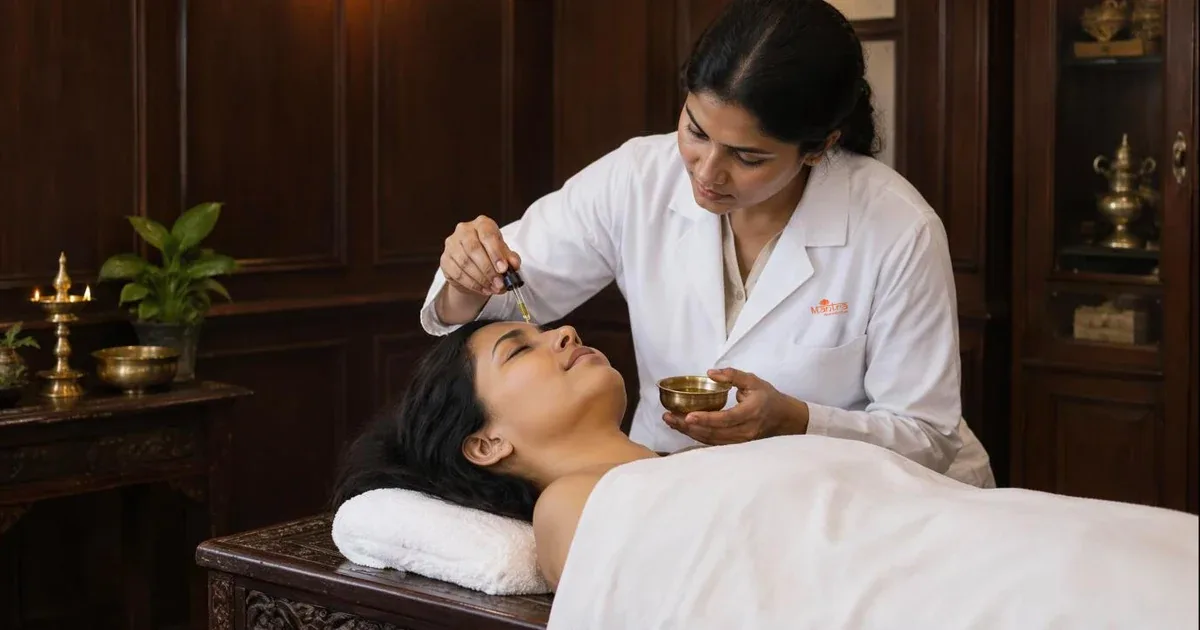
Knowing the names makes the treatment plan easier to follow. Shirodhara is a steady stream of warm medicated oil poured over the forehead while you lie down. Kizhi uses warm cloth bundles filled with herbs or rice, pressed onto sore areas. Pichu is a pad soaked in warm oil and left on one area, such as the lower back. Nasya is the use of medicated drops in the nose, often discussed for sinus and head complaints. Your doctor should explain why a particular therapy is suggested and what you will feel during it.
How much time should you set aside?
A first consultation usually takes longer than a follow-up, because the doctor is taking a full history. Therapy sessions vary in length, and you may be asked to rest for a short while afterwards and avoid a cold shower or heavy meal straight away. If you are fitting sessions around office hours, ask about the earliest and latest slots before you commit to a plan.
Signs you have found the right doctor
- You were asked about your medicines, reports and other doctors before any plan was suggested.
- You left the first visit knowing what the plan is and when it will be reviewed.
- Your questions were answered without pressure to book a long package on the spot.
- The doctor was clear about what Ayurveda can and cannot help with in your case.
Booking a consultation at Mantra Ayurveda
At Mantra Ayurveda Clinic, every plan starts with a consultation with our doctor, who reviews your history and explains the options before anything is booked. If you would like to talk it through first, send us your question through the form on this page and we will call you back.
This article is for general information and does not replace a consultation with a doctor. Results differ from person to person, and any treatment can have side effects; please speak to a doctor before starting.